
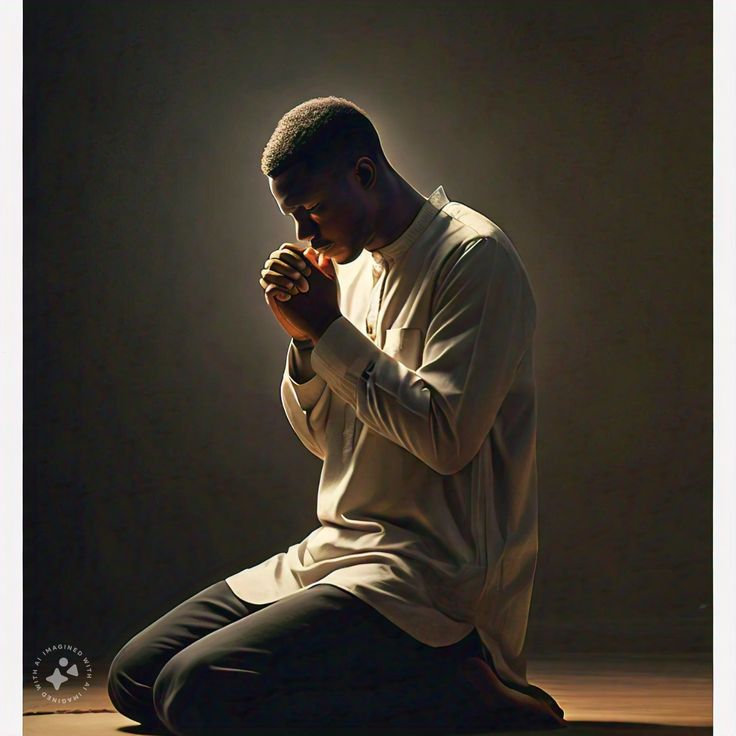
“Immediately Jesus made His disciples get into the boat and go before Him to the other side, while He sent the multitudes away. And when He had sent the multitudes away, He went up on the mountain by Himself to pray. Now when evening came, He was alone there.” — Matthew 14:22-23
Jesus was a very busy man. In the opening verses of John 14, we learn that Herod had John the Baptist—Jesus’ cousin—beheaded at the request of the daughter of his unlawful wife, Herodias. It was such a painful moment for the Lord. Upon hearing the news of John’s gruesome murder, He departed by boat to a deserted place to be alone. One would expect that He would find time to grieve, but, as with any person in high demand, He could not. The selfishness of the crowd, filled with miracle-seekers, also denied Him space to mourn.
Then, a momentous miracle was performed. With five loaves and two fish, Jesus fed five thousand men, not including women and children. The natural response would have been to have the head of the ministry’s media team gather his staff, ensuring every moment was captured and well-edited images were broadcast to the media outlets of the time. Then, He could bask in the supernatural manifestation of power, collect testimonies, and use them as part of the publicity for the next crusade. However, this would have been another time-consuming task, diverting attention away from something far more important—being alone with God, without any public acclaim.
What Jesus did instead, is the focus of these meditations.
Go Away, Crowds
In an act that displayed the priority of His heart, Jesus “immediately … made His disciples get into the boat and go before Him to the other side.” He didn’t waste time but acted without delay to dismiss the cheerleaders – disciples like Philip and Andrew, who could bring people to Jesus who wanted to see him (John 12:22-22), taking up more of His time. His being the last to leave was not for personal counselling, the kind that the Man of God engages in after a powerful ministration to mop up what was left undone (surely there is a time and place for that, but not now). He stayed back for a singular reason: to send the multitudes away.
At this moment, the multitudes would have constituted an obstacle to a noble pursuit—the one needful thing: being alone with the Father. If you are like me, sometimes you just want alone time—not for any particular goal, but simply to be alone for the sake of it. For Jesus, however, this dismissal was for a higher purpose: “When He had sent the multitudes away, He went up on the mountain by Himself to pray.”
Could he have had quality time alone with the Father if the crowds were present? Surely not! The crowds at that moment included the disciples and the multitudes he had just fed. Whether they were close confidants or occasional miracle-seekers, anyone who would interfere with God-alone time had to be dismissed. When they left, he didn’t linger, he went to the secret place of prayer – up on the mountain. There, He was by Himself, and the purpose was to commune with the Father.
The crowds at that moment included the disciples and the multitudes he had just fed. Whether they were close confidants or occasional miracle-seekers, anyone who would interfere with God-alone time had to be dismissed.
I’d like you to notice how deliberate Jesus was about this matter of making time to be by himself so he could pray. If He had permitted the crowd, they would remain with Him. Recall that even when He was bereaved and withdrew Himself, they still found Him and He obliged them. But when it came to prayer, no sympathy for the crowd was allowed to interfere. The time didn’t fall into the Lord’s lap; He created it. Those who say they do not have time to be alone with God have not prioritized the divine presence. If they did, they would do what Jesus did—make time.
This was not a one-off event in the Lord’s life either. In Mark chapter 1, He healed Simon’s mother-in-law and many others who had various diseases, and He also drove out many demons. Verse 35 then tells us that “Very early in the morning, while it was still dark, Jesus got up, left the house and went off to a solitary place, where he prayed.” There’s the same deliberateness in separating from the crowds and finding a quiet place, all for the sake of communion with the Father.
Created and Re-Created for Fellowship
This matter of being with God is at the heart of why he made us. In Genesis 3, the LORD God was walking in the garden in the cool of the day when Adam and his wife Eve, hid from him. It was sin that separated man from God; in the beginning, it was not so. Peter summarizes the whole purpose of Christ’s death as being to bring us to God: “For Christ died for sins once for all, the righteous for the unrighteous, to bring you to God” (1 Peter 3:18). When Jesus came, He also demonstrated this centrality of fellowship in His relationships with those who believed in Him. Among his devoted followers, “He ordained twelve, that they should be with Him, and that He might send them forth to preach” (Mark 3:14). Being with him was compulsory (should) while sending them forth was probable (might).
During his visit to the home of Martha and Mary, Martha became so distracted by all the preparations that had to be made to host the special guest – Jesus – that she queried and asked the Lord to direct her sister Mary to help with the preparations. Jesus’ response was firm and instructive: “You are worried and upset about many things, but one thing is needed. Mary has chosen what is better, and it will not be taken away from her” (Luke 10:41-42).
Friend, we were created—and created anew in Christ Jesus—for God’s presence.
Friend, we were created—and created anew in Christ Jesus—for God’s presence. God Himself showed this in His relationship with our first parents. When we sinned and were cast out of his presence, Jesus died to bring us back to him (1 Peter 3:18). Now, He is preparing a place for us and when He is done, He will return to take us so that we will be with him forever (John 14:2-3; 1 Thessalonians 4:17).
The Crowds
I use the term ‘crowds’ here to refer to the various distractions that prevent us from spending time alone with God in prayer. For Jesus, it was His disciples—perhaps the closest people to Him on earth—and the throng of miracle-seekers that He had to send away.
So, the first question for you is this: What or who do you need to send away (dismiss) so that you will be alone with the Father?
FAMILY. If you’re a family person—married with a wife and perhaps children—as Jesus showed with His close comrades, even those closest to you must sometimes be seen as crowds to be put away in order to be alone with the Father. There is a time for corporate devotions, but as Jesus exemplified, there is also a time to be alone, by yourself, with the Father. The purpose here must be to pray.
MOBILE PHONES. In this age, perhaps the things that crowd our lives the most are our mobile phones. Our lives are now so intertwined with, and dependent on, them. As the world goes cashless, your banking is increasingly done from your phone. Perhaps even your Bible and devotional are on your phone, and it is your companion even in the place of prayer. But you will also agree that it often constitutes a distraction. When you wake up, what do you reach for first in those waking moments? Maybe it even accompanies you to the toilet seat and the dining table. Once you’re with it, time passes, and you do not even realize it—time that could have been used for solitude and prayer. At night, sleep is the only power that forces you to drop it, sometimes without even realizing it. Perhaps the only time you put it away is when you have to take a bath, and that’s only because it is hydrophobic. Maybe it’s curiosity, a desire to always be informed, or an addiction. Whatever it is, you must learn to treat your phone as a ‘crowd’ that needs to be put away for communion with the Lord to happen. You can make up your mind that when you wake up, you will not go to your phone or online until you’ve gone to the Lord in prayer.
WORK. By work, I mean all kinds of work, including what we call the work of God. It was the work of God that Jesus was busy with but had to put away for the higher purpose of prayer. Whether you’re a fellowship leader, a pastor, a preacher, or a Christian counsellor—whatever work of God keeps you in the crowd—you must have times when you send these ‘crowds’ away so that they don’t crowd your time with God. The Father is more interested in you than in what you do for Him. If you are too busy for His presence, then perhaps you are busier than the Lord intends for you to be.
Whether you’re a fellowship leader, a pastor, a preacher, or a Christian counsellor—whatever work of God keeps you in the crowd—you must have times when you send these ‘crowds’ away so that they don’t crowd your time with God. The Father is more interested in you than in what you do for Him.
In 1 Samuel 9, there is a statement made by Saul, who later became Israel’s king, that reveals the Father’s heart in this matter. His father, Kish, had sent Saul and a servant to look for his lost donkeys. After a long and unsuccessful search, Saul said to the servant, “Come, let’s go back, or my father will stop thinking about the donkeys and start worrying about us” (1 Samuel 9:5). Similarly, your heavenly Father is more concerned about you than about whatever ‘donkeys’ you may be tasked with finding for Him. It is the same heart that Jesus revealed in the home of Martha and Mary, as spoken about above. So, whether it is work that you consider ‘secular’ or ‘the work of God,’ the Father is more interested in you than in whatever work you may be doing.
INTERNAL CROWDS. Internal ‘crowds’ are the distractions within you that hinder or interfere with your times of prayer. They range from an unwillingness to pray to wandering thoughts. These internal crowds can be the deadliest—the enemy within that opens the door to the enemy without. Deal with them; dismiss them. Learn to cast your cares on Him in prayer, for He cares for you. “Before you know it, a sense of God’s wholeness, everything coming together for good, will come and settle you down” (Philippians 4:7).
Whatever the source of your unwillingness to pray, you must wage war against it until you love His presence. Those wandering thoughts that drift off, only for you to realize moments later that you were not praying—bring them into subjection to Jesus, and do so by prayer. Perhaps these crowds are allowed to interfere with your prayer times because you have not grasped the importance and power of prayer. If you did, you would do what Jesus did—send the multitudes away so that you can pray.
Jesus’ example of going to a solitary place to pray is one key that can help you deal with these distractions. A change of location can do a world of good.
And don’t you think Satan is an uninterested party in your prayer times. He works overtime to ensure that you are crowded by distractions and kept from praying. Why would he stand by and watch you summon the most potent force on earth that thwarts his work?
Make Prayer Your Priority
Jesus was a busy man, yet He was intentional about making time to be alone with God in prayer. The one who had the whole world to save still knew to send away the multitudes so He could be alone with God and pray. Jesus prioritized time alone with God despite His busyness and the demands of those around Him. You have not been given the whole world to save, so the excuse of not having time falls flat. No one has time—you make time, just like Jesus did; you send the crowds away.
You have not been given the whole world to save, so the excuse of not having time falls flat. No one has time—you make time, just like Jesus did; you send the crowds away.
What are your ‘multitudes’? What can you dismiss today in order to prioritize your time with God? If you give being alone with God in prayer the preeminent place in your life, all other things will fall into their rightful place—they will become secondary. That way, it will be easier for you to send away the multitudes, no matter how close to you they are, so that you can give attention to the one thing that is needful—being with the Father. In all of this, remember that the grace of God in Christ Jesus is abundantly available to you. Just ask.
 World Changers Magazine
One thing that is most needful is how I have decides to always make out time to stay with my maker.
This write up is timely .
Thanks, mentor.
LikeLike