
‘He asked them, “What are you discussing together as you walk along?”
They stood still, their faces downcast. One of them, named Cleopas, asked him, “Are you only a visitor to Jerusalem and do not know the things that have happened there in these days?”
“What things?” he asked.
“About Jesus of Nazareth,” they replied. “He was a prophet, powerful in word and deed before God and all the people. The chief priests and our rulers handed him over to be sentenced to death, and they crucified him; but we had hoped that he was the one who was going to redeem Israel.”’ – Luke 24:17-21a
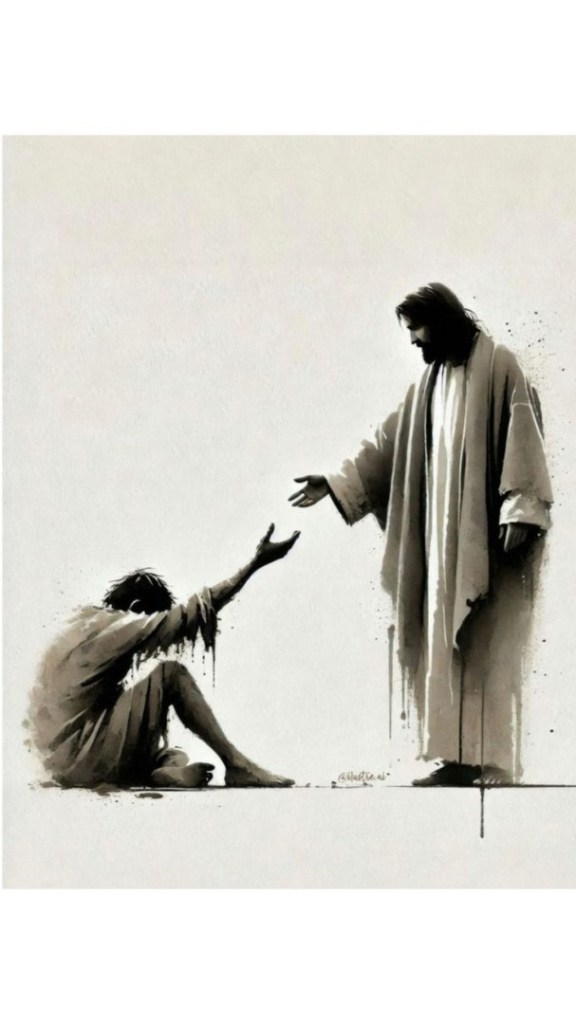
Two disciples walked along the dusty road to Emmaus, weighed down by grief and confusion after Jesus’ crucifixion. As they walked, a stranger joined them – unrecognized as the risen Lord himself. In their conversation, they gave a striking description of Jesus: “a prophet, powerful in word and deed.”
Walking is central to this story. And walking, both physically and spiritually, requires balance. In the natural world, humans are designed to walk on two legs, a unique trait called bipedalism. It provides stability, vision, and forward motion. In the same way, our spiritual lives are meant to move forward on two essential ‘legs’: word (what we say) and deed (how we live). Just as we cannot physically walk well on one leg, we cannot spiritually walk well if our words and actions are out of balance. This is what I call spiritual bipedalism – a harmony between what we say and what we do. When our words and actions work together, our witness is powerful. But when one is weak or missing, our witness weakens.
Our spiritual walk requires two legs: word and deed
Jesus perfectly embodied this spiritual ‘bipedalism.’ His life showed complete harmony between what he said and what he did. As the two brothers journeyed, suddenly, Jesus himself came up and walked along with them, but they were kept from recognizing him.
He asked them what they were discussing together as they walked along. Not knowing who the asker was, this question gave them the opportunity to truly say who they knew and perceived Jesus to be behind him, without his presence influencing their testimony about him. Jesus had earlier, while still alive, asked his disciples who others and they thought he was (Matthew 16:13). It can be tricky to give an honest assessment of a superior in their presence. The case on the road to Emmaus was different; as far as Cleopas and his travel companion were concerned, the question came from a random person.
Their Assessment of the Christ
They wondered how anyone other than a visitor to Jerusalem could be ignorant of the things that had happened there in recent days. Jesus probed further: “What things?”
Their response, describing who Jesus was, is the focus of these meditations. They replied, “About Jesus of Nazareth, he was a prophet, powerful in word and deed before God and all the people (my emphasis).
Jesus perfectly embodied balance between what he said and what he did
Biblically, a prophet was a spokesman for God, who spoke in God’s name and by his authority. He was the mouth by which God spoke to men, and hence what the prophet said was not of man but of God (Easton). The honest assessment of these brothers about Jesus was that he was a prophet, God’s mouthpiece.
The Power of the Prophet
The Holy Spirit no doubt indwelt this prophet without measure. In the eyes of the people, however, what gave him legitimacy? What made him powerful? What made them count him someone who spoke from God – a prophet?
The brothers said he was powerful in word and deed! There you have the two legs that confer bipedalism to the prophet: powerful not only in word, neither in deed alone, but in both. These are not just words. If our own ministries must be accepted, respected and effective for God, they must have these two legs or else we will hop on one leg. How far will any person go with one leg?
Mighty in Words
Jesus was powerful in word. Once, the powers of the day sent soldiers to arrest him. They went, listened to him and returned without Christ. When asked why they didn’t effect the arrest, they responded, “Never man spake like this man” (John 7:46). Powerful in words!
If either word or deed is missing, our witness becomes lopsided and ineffective
We are not all prophets in the strictest definition of the word, but in a sense all believers have been called to speak for God. Peter says we have been called to “declare the praises of him who called you out of darkness into his wonderful light” (1 Peter 2:9). As someone who speaks for God to the world, you must be powerful in word; your words ought to carry weight. What comes from your mouth ought to be a double-edged sword that can penetrate and divide closely knit things like soul and spirit, joints and marrow. The speech of the person powerful in words ought to “be always full of grace, seasoned with salt, so that you may know how to answer everyone” (Colossians 4:6). They must not be trivial or careless talkers but must show “soundness of speech that cannot be condemned” (Titus 2:8).
Mighty in Works
Powerful words are good, but they alone are not sufficient. The servant of God must be powerful in deed also as Jesus was – he performed many miraculous signs. In addition to that, Jesus was powerful in the holiness of his character, and it is that which I am really interested in here. He didn’t speak powerfully while being morally weak.
Necessary for Effective Ministry
For us, many times our effectiveness is blunted by the lack of either of these two legs. Sometimes we are morally sound but can’t speak powerfully. Sometimes we speak eloquently but are weak in our deeds.
The discrepancy in our words and deeds is where our message and integrity fail. Paul says, they have “a form of godliness, but deny the power thereof” (2 Timothy 3:5). This weakness was the undoing of the Levitical Priesthood and led to it being discarded by God as “weak and useless” (Hebrews 7:18). Jesus however is a priest forever, “after the power of an endless life” (Hebrews 7:16).
Jesus had both, and we must cry out to him until we are powerful in word and in deed. In him, “the Word became flesh and dwelt among us” (John 1:14). It is when the Word is not only word (speech) but becomes flesh (deed) also that we can behold his glory.
Moral weakness is the undoing of many a servant of God
How many times have you met a preacher of sound character, zealous for the Lord, but not powerful in word? He reads a portion of scripture; you see wonderful truths in it but he seems not to see it or doesn’t have the power of words to express it. Or one is eloquent but lacks the moral power to back their powerful speech. Both impinge negatively on fruitfulness. Moral weakness is the undoing of many a servant of God. O God, give us power in word and in deed.
Others Have Walked This Way Too
SAMUEL. Another servant of God who exemplified this bipedalism was Samuel the prophet. Despite the rot in the house of Eli the priest, Samuel was different. It is recorded that “Samuel grew, and the Lord was with him, and he let none of his words fall to the ground” (1 Samuel 3:19). That was a man powerful in word; nothing he said proved false. At the end of his life, Samuel boldly declared that he had never defrauded, oppressed, or taken bribes, and the entire nation confirmed his integrity (1 Samuel 12:3-5). His life was a powerful example of being mighty in both word and deed.
PAUL. Perhaps there is no servant of Christ more powerful in word in the New Testament than the apostle Paul. In his farewell address to the Elders of the Ephesian Church, he said boldly, “I have not coveted anyone’s silver or gold or clothing. You yourselves know that these hands of mine have supplied my own needs and the needs of my companions” (Acts 20:33-34). Bipedalism – powerful both in word and in deed.
Before God and All the People
The power that Jesus had in word and deed was before God and all the people. That, if you like, is another pair of legs that this power must be based on, but we may talk about that on another day. Suffice it to say for now that for effective ministry, our power in word and deed must be before this dual audience. We serve God, but we do it before men. We must be powerful in word and deed first before God. Our human audience, whom we have been called to minister to, must see us as such too. The testimony about Jesus we are looking at was made by men.
Pray that you will be made powerful in word and in deed
I like to end by making this a call to prayer and vigilance. Pray that you will be made powerful in word and in deed. Watch how you walk, that the word of Christ may dwell in you richly, so you will be powerful in word. Watch how you conduct your affairs so that your deed will not weaken your testimony. May we not be crippled in any of these feet so that our ministries will be powerful before God and all the people.
 World Changers Magazine