
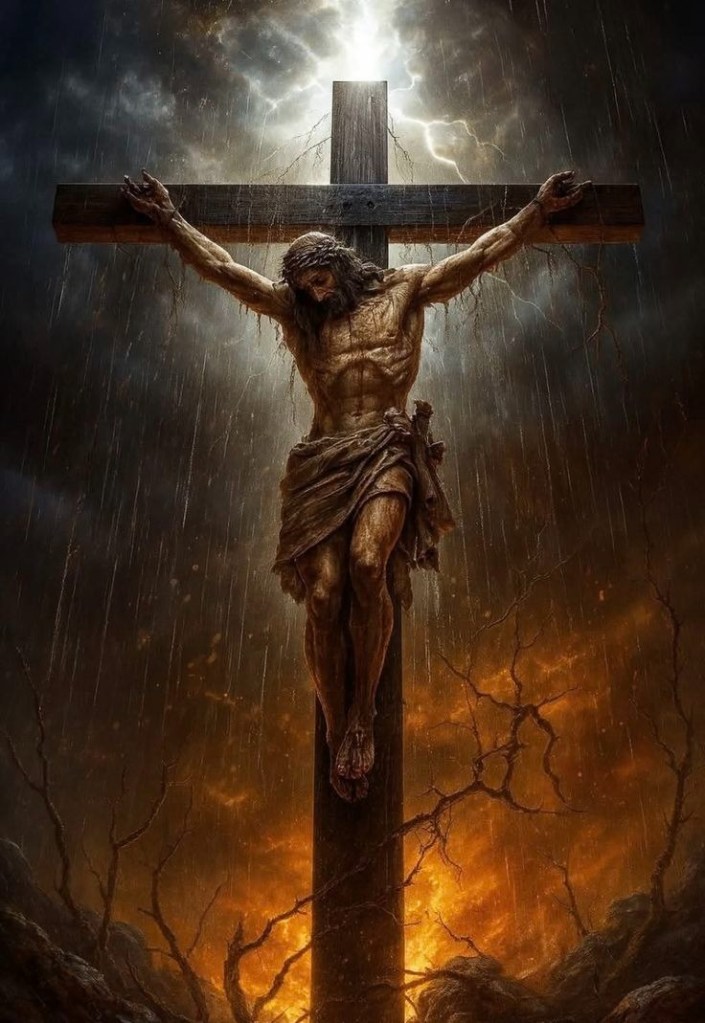
“Every priest goes to work at the altar each day, offers the same old sacrifices year in, year out, and never makes a dent in the sin problem. As a priest, Christ made a single sacrifice for sins, and that was it! Then he sat down right beside God and waited for his enemies to cave in. It was a perfect sacrifice by a perfect person to perfect some very imperfect people. By that single offering, he did everything that needed to be done for everyone who takes part in the purifying process.” – Hebrews 10:11-14 (MSG)
The Weakness of The Old System
Whenever I read the New Testatment’s view of the Levitical Priesthood, I do so with mixed emotions. Why would an entire tribe devote their lives to a ministry that ultimately cleansed no one of sin? Why all the blood and the loss of animal life?
Scripture gives a sobering verdict: those sacrifices “can never take away sins” (Hebrews 10:11). Instead, they served as an annual reminder of sin, because “it is impossible for the blood of bulls and goats to take away sins” (Hebrews 10:3–4). Perfection could not be attained through them (Hebrews 7:11, 19; 10:1), and the system was eventually “set aside because it was weak and useless” (Hebrews 7:18).
So why did God institute it?
God deliberately allowed the system to be insufficient so that it would point beyond itself—to Christ
In his wisdom, God established that order not as the final solution to sin, but as a temporary and instructive one in redemptive history. It was a shadow pointing to the reality – Christ. It prepared the way for a “better hope” (Hebrews 7:19): a new covenant priesthood grounded not in ancestry, but in grace and the “power of an indestructible life” (Hebrews 7:16).
God deliberately allowed the system to be insufficient so that it would point beyond itself. It was only a shadow of the good things to come, not the reality itself (Hebrews 10:1). And those “good things” are found in Jesus.
Repetition Without Perfection
Because the system was a shadow and not the realities, it could not produce lasting results. The sacrifices were repeated endlessly, year after year, yet they could not make perfect those who drew near to worship. Those who took part in them still felt guilty for their sins. All they got were reminders of their sins. Imagine the trauma of approaching a holy God yearly, with detailed specifications of how to behave and what to offer, accompanied by elaborate ceremonies, only to go away with a fresh consciousness of the sins you have committed and have sacrificed to atone for. It was a system that failed to deal with the problem that the adherents hoped to solve: a clean conscience and a right-standing before a holy God.
Jesus laid bare what God really thought about those sacrifices:
It was a system that failed to deal with the problem that the adherents hoped to solve: a clean conscience and a right-standing before a holy God
“Sacrifice and offering you did not desire, but a body you prepared for me; with burnt offerings and sin offerings you were not pleased” (Hebrews 10:5-6).
Clearly, something more was needed.
What God Wanted
If God, who instituted the Old Testament system of worship and by law required them to be done, was not pleased with them, what did he want? The One and Only, who is at the Father’s side tells us: “I have come to do your will, O God” (Hebrews 10:7,9), “a body you prepared for me.”
Jesus is who the Father wanted. The body of the Christ, rather than the blood of bulls and goats, is what the Father wanted. Even before this body was offered, the Father had declared, “This is my Son, whom I love” (Matthew 3:17; 17:5). What the bodies of animals could not do, the body of the Son would achieve.
As far as God is concerned, those who are in Christ stand perfect before him
Hebrews 10:10 makes it plain: “And by that will, we have been made holy through the sacrifice of the body of Jesus Christ once for all.”
The holiness the old system could not produce has now been secured through Christ. Unlike the repeated sacrifices of the Levites, his offering was once and for all. Unlike the sacrifices of the old system which took care of only those who drew near and could afford to bring what was required, Christ’s sacrifice extends across all time – covering those who died believing before he came; those who were present at the time; and those who would come later like you and I. It continues throughout all generations.
Christ’s Superior Sacrifice
Consider a simple analogy: we bathe regularly because one bath cannot permanently remove dirt. In the same way, the repeated sacrifices of the Levitical system revealed their own inadequacy. They could not deal with the root problem.
Jesus did what they never could – his one sacrifice dealt decisively with sin
Jesus did what they never could – his one sacrifice dealt decisively with sin.
The Levitical Priest “stands and performs his religious duties” (Hebrews 10:11). They kept standing because the work they did was never complete and they had to keep doing it. But Christ is different: “after he had offered for all time one sacrifice for sins, he sat down at the right hand of God” (Hebrews 10:12). His posture tells the story – his work is complete. He does not need to stand daily and offer sacrifices like the Levites did. It also means that God is satisfied with the sacrifice that Jesus offered and has honoured him with a seat at the place of highest honour. What he waits for now is for his enemies to be made his footstool (Hebrews 10:14).
The contrasts between the two priestly orders are worthy of highlight: the Levitical Priests were many; Christ is our one High Priest. They offered repeated sacrifices while Christ offered one that was enough. They stood while Christ sat down after his single sacrifice.
Made Perfect in Christ
What, then, is the result of Christ’s finished work?
“It was a perfect sacrifice by a perfect person to perfect some very imperfect people.”
Those who put their faith in the sacrifice of Christ have been made perfect by the prefect sacrifice of the perfect Christ.
All that replacing the Levitical Order was for you and I to be made perfect before God. That work is finished. The NIV says “he has made perfect forever”. “He has” is a past tense meaning the work is done. Jesus has completed our perfection. No other sacrifice is required; there is no other work to be done for us to be perfected. Christ has completed that. How long will this perfection last? Forever! “He has made perfect forever those who are being made holy.” As far as God is concerned, those who are in Christ stand perfect before him.
The Basis of Our Perfection
This perfection is true because of what God has decided to do with the sacrifice of Christ. He says, “Their sins and lawless acts I will remember no more” (Hebrews 10:17). To be made perfect means that our sins are fully forgiven – and God chooses not to hold them against us. He never brings up our sins in his relationship with us. He does not count them against us – past, present, or future.
To be made perfect means our sins are fully forgiven—and no longer counted against us
This doesn’t mean that believers do not make errors or sin. We know that because the writer also says those who have been made perfect are those “who are being made holy.” Here again it is important to note the tense in which this work is stated. It means our being made holy is an ongoing work. Another term for that is Sanctification, which is a lifelong work. So we are not sinlessly perfect in this life, otherwise that would mean we do not need sanctification. But while we are being made holy, on account of our union with Christ, we are seen by God as perfect. It is like beginning a journey (being made holy) while already being credited with its completion (perfected).
The Evidence of Perfection
How, then, do we know this is true in our lives?
Hebrews 10:14 points us to the answer: those who are made perfect are those who are being made holy. Do you see growth in your life? A deepening trust in God? A growing desire for holiness? That is the evidence. As we look back, we should be able to trace the changes Christ is producing in us. That quiet, steady transformation is proof of his work.
Those who are made perfect are those who are being made holy
This truth both comforts and challenges us. It assures imperfect sinners that we are already accepted in Christ – and it compels us to pursue holiness with renewed desire.
Because of Christ, we stand perfect before God even now – not because we are faultless, but because in him, we are being made holy.
O praise the glory of the grace of God.
May God grant us an ever-deepening hunger for holiness.
 World Changers Magazine