
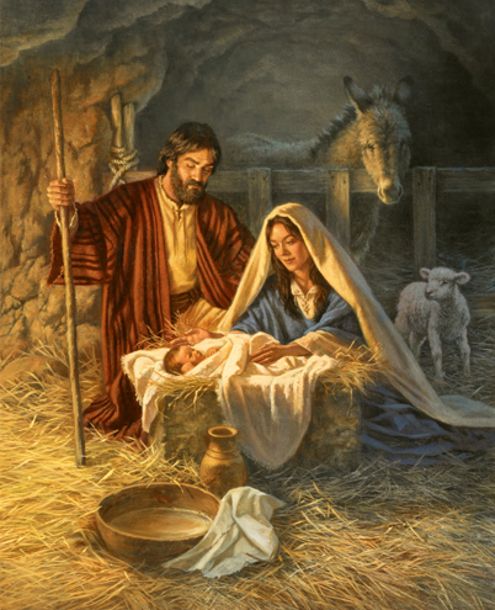
Photocredit from Istockphotos.com
“Since the children have flesh and blood, he too shared in their humanity so that by his death he might destroy him who holds the power of death–that is, the devil– and free those who all their lives were held in slavery by their fear of death. For surely it is not angels he helps, but Abraham’s descendants. For this reason he had to be made like his brothers in every way, in order that he might become a merciful and faithful high priest in service to God, and that he might make atonement for the sins of the people. Because he himself suffered when he was tempted, he is able to help those who are being tempted.” –Hebrews 2:14 18
The season is upon us, the season of Christmas. Many prepare for this one day right from the turn of the year. People are taken up with what to wear, eat and drink; where to travel and who to welcome; holidays are planned long before the time arrives. While there is nothing wrong with celebrating this blessed season, we need to pause and consider whether or not all this is done without the main purpose of the season being lost on us.
There is something even more subtle that I have observed: whereas season’s greetings used to clearly state that this was the season of Christmas (the celebration of Christ’s birth), many such greetings now come neutral. They simply say this is a holiday season. Is holiday — a period of leisure and recreation— the reason for the season. When work-free days are given by governments and employers at this time, what are they for? In the midst of the repetitive nature of the season and the colour and fanfare, it is very easy to flow along with the tide and lose sight of what Christmas is all about. When was the last time, if ever, you were gripped by the Christmas story? We need to remind ourselves of why we really celebrate, or should celebrate.
The Divine Became Human
Christmas is the day the divine Son of God was incarnated —he took on our flesh and blood. He laid aside the privileges of deity and took on the form of mortal flesh and blood. The writer of Hebrews says “Since the children have flesh and blood, he too shared in their humanity” (Hebrews 2:14). The term “children” comes from the preceding verse and speaks of the spiritual children of Christ. These are “children born not of natural descent, nor of human decision or a husband’s will, but born of God” (John 1:13). It is true that “God so loved the world that he gave his one and only Son” (John 3:16), but it is also true that, as Caiaphas prophesied, Jesus came “for the scattered children of God, to bring them together and make them one” (John 11:52).
Christmas is the day the divine Son of God was incarnated —he took on our flesh and blood
Maybe you have become too familiar with that, think of this: when the angels fell, he let them go and live under the dominion of their sin. They will remain so until eternity. Jesus never became the saviour of fallen angels and never took on their nature. But when we fell, he took on our humanity. Hallelujah! I pray that the eyes of your heart are opened to behold what manner of love this is —that the eternal, divine God, creator of the universe, chose to debase himself and take up the form of his creation. Imagine being asked as a human to take up the nature of say, cockroaches, so that you could save them. How humbling. Now that is even a poor example because humans and cockroaches are both members of the same family of created things, but God exists in an infinitely higher class. Yet he took on our nature at that first Christmas. What he didn’t do for angels, he did for you and I.
Freedom from the Slavery of Fear and Death
Why did the immortal one cloth himself with mortality? So that he could die! Hebrews says “so that by his death…” He became human so that he could die. As God, he couldn’t die, but as man, he could die. Again, let that sink in: the depths that Jesus went to so that you could be saved. When you raise chickens in a poultry, no matter how much you spend on them, you have one purpose in mind —so that they would eventually die. Jesus knew from the start that his debasement with our humanity was so that he could die. The whole purpose of his coming was so he could die.
What would his death accomplish? “He might destroy him who holds the power of death—that is, the devil”. Long before Adam and Eve sinned, the devil had sinned. Since Adam, he has lured men and women into sin whose consequence is death. He accuses humanity before God. He also puts in the minds of men and women the fear of death. He both tempts to sin and torments with its consequence. In that sense, he holds the power of death. Satan’s armament against us is our own sin. By his death, however, Christ disarmed the devil, he took out of his hand the grounds upon which he could hurt us —our sin. He paid the penalty for our sin and breaks the power of sin over those who put their faith in Him. By his death, Jesus wiped the slate clean for us. Therefore, Satan has lost any legitimate grounds to accuse us before God, all by the death of Jesus and our faith in his finished work. “If God is for us, who can be against us? Who will bring any charge against those whom God has chosen? It is God who justifies (Romans 8:31,33).
Satan’s armament against us is our own sin. By his death, however, Christ disarmed the devil, he took out of his hand the grounds upon which he could hurt us —our sin.
“And free all who all their lives were held in slavery by their fear of death.” Whether it be Old Testament saints who lived in the dispensation where Christ had not brought life and immortality to light through the gospel, or New Testament saints whose minds do not know the truth about what Christ has done to death, Jesus died for them all. Now, we do not fear death. We can say with Paul, “Where, O death, is your victory? Where, O death, is your sting?” (1 Corinthians 15:55). Death does not now condemn us; rather, it ushers us into the presence of the one who came at Christmas for us. Whether we are awake or asleep, we are together with him (1 Thessalonians 5:10). This help is not for angels, but for Abraham’s descendants, you and I.
In Things Pertaining To God
Sin was the cause of separation between God and man. The justice of God required that sin must be punished, for its wages is death. To help us, Christ had to be made like us in every way, “in order that he might be a merciful and faithful high priest in service to God, and that he might make atonement for the sins of the people.” That he accomplished by his substitutionary death. The old testament priests stood in between God and sinful man, to make atonement for man’s sins. The gifts those priests offered could not take away sin, “because it is impossible for the blood of bulls and goats to take away sins” (Hebrews 10:4). But “this priest” (Hebrews 10:12), by one sacrifice, “made perfect forever those who are being made holy” (Hebrews 10:14). This is why we celebrate his birth. This priest is sufficient for us “in things pertaining to God.”
In Things Pertaining To Man
We are here clearly told why the divine had to be incarnated. It was necessary that he be “in all things made like His brethren”. We the people (brethren) are sorely tempted. Through the temptations arose those sins of the people for which He makes atonement. A saviour in faraway heaven, detached from the feelings of our infirmity would be unsuitable, even unable, to sympathize with us. In his having been tempted lies his special ability to help the tempted. By his sympathy, by his knowledge of the help that is needed, by the position of High Priest which he has gained through suffering, he meets our need. When he calls to mind his earthly sorrows and temptations, he is mindful of what troubles we daily face and he is thus able to help us. “For we do not have a High Priest who is unable to sympathize and understand our weaknesses and temptations, but One who has been tempted [knowing exactly how it feels to be human] in every respect as we are, yet without [committing any] sin.” (Hebrews 4:15-16, AMP). It is one of the reasons why “every high priest is chosen from among men” (Hebrews 5:1). When we run to him, he is willing, ready and able to help us. This priest is sufficient for us in things pertaining to man.
No Christmas without Christ
The reason for the season is Christ; without him, there would be no Christmas. He came so that he could die for our sins. This is not a holiday season; it is a season for remembering the priceless gift of Christ. Any holiday should only provide for you an opportunity to have more time to dwell on this most precious, unquantifiable of gifts —Jesus. We celebrate because on that first Christmas, the divine Son of God put on our flesh and he did all of that for you and I. Yes, celebrate, but not as the world does, in sinful merriment. Celebrate as the redeemed children of God for whom the Saviour came. This season and always, “whatever you do, whether in word or deed, do it all in the name of the Lord Jesus, giving thanks to God the Father through him” (Colossians 3:17).
 World Changers Magazine
Instead of just being a God who knows what we feel, He became flesh that He may feel what we feel.
Always blessed reading here!
Hallelujah!🙌
LikeLike