
“And what more shall I say? I do not have time to tell about Gideon, Barak, Samson and Jephthah, about David and Samuel and the prophets, who through faith conquered kingdoms, administered justice, and gained what was promised; who shut the mouths of lions, quenched the fury of the flames, and escaped the edge of the sword; whose weakness was turned to strength; and who became powerful in battle and routed foreign armies.” – Hebrews 11:32-34
The eleventh chapter of the Book of Hebrews opens by explaining faith – the confidence that what we hope for will actually happen; the assurance about the things we cannot see. It also adds that this faith – firm belief in God – is what the ancients were commended for or earned a good reputation. So, there is something about faith that is praiseworthy. One version headlines this portion as the power of bold faith. The examples of these men and women of faith have been written down for our admonition.
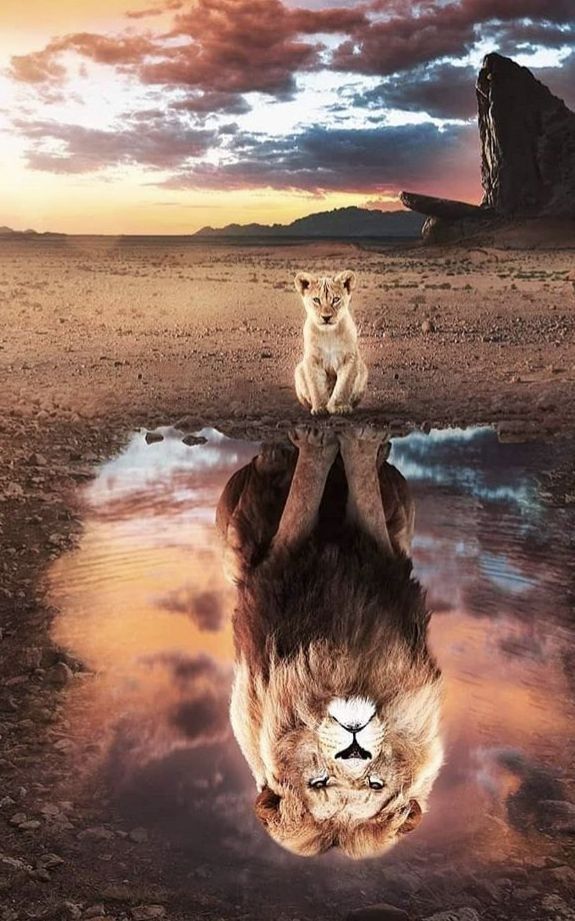
The apostle, having given a classic of many of these commended Old Testament believers, whose names he mentioned and the particular heroics of their faith, closes with a summarized account of another set of believers, where, unlike the previous set, specific acts are not ascribed to particular individuals by name. Perhaps this is to allow those well-acquainted with the Bible story to apply these. Of these people, he says they, through the power of faith, “conquered kingdoms, administered justice, and gained what was promised; … shut the mouths of lions, quenched the fury of the flames, and escaped the edge of the sword; whose weakness was turned to strength; and … became powerful in battle and routed foreign armies.” Tucked in that impressive catalog of exploits is the phrase, whose weakness was turned to strength, and that is the focus of these meditations.
Out of the Weak Came Something Strong
In the case of these Saints, however, out of their weakness came strength. That paradox is a miracle and it is the miracle of faith.
From being weaklings, they became strong men and mighty warriors; they found strength when they were weak such that they put enemy forces to flight. The Amplified Version says, “out of frailty and weakness [they] won strength and became stalwart, even mighty and resistless in battle, routing alien hosts.” The words ‘out of’ are very poignant here. When you want to make a withdrawal out of a bank account, you can only withdraw what is already in it; you cannot withdraw what is not there. You cannot go to an account having a zero balance and expect to walk away with a hundred dollars; they are not there. The account will only give what it has. In the same vein, you do not expect strength to come out of a weak person; it is not there. The very fact that they are weak is because they are lacking in strength. Strength is what comes out of the strong. In the case of these Saints, however, out of their weakness came strength. That paradox is a miracle and it is the miracle of faith. Faith, by its very definition, is perceiving as real fact what is not revealed to the sense. The sense of sight that works through the organ of sight – the eyes – may not see it, but faith believes it to be there nonetheless. The sense of touch may not feel it through the skin but faith perceives it as real – as being there. This is counter-intuitive but it is one of the classic features of faith that it confounds the senses. What this faith holds on to is not the visible things that fade away but the infinite power of the invisible God. It is this power that shows itself strong on behalf of those who wait for him. This is the power that is manifested in a weakling that it can then be said, out of their weakness they were made strong. The strength you see being manifested is actually the power of God that faith in God causes to be made manifest. This is this kind of faith that that puts well-equipped armies to flight before a weak but God-dependent people.
What this faith holds on to is not the visible things that fade away but the infinite power of the invisible God.
A Historical Truth
This is not an unproven claim. The Bible has records of many who had natural infirmities both of the body and the mind, who trembled and fainted in their spirits and were, before their enemies, weak, few in number as to force and power, yet through faith in God were made strong and routed forces far more powerful than they were. In this account, Gideon, Barak, Samson, and David are mentioned.
GIDEON: His story is recorded in Judges 6-8. He was, by his own admission, from the weakest clan in Manasseh and the least in his own family (Judges 6:15). His vocation was also a mean one (threshing wheat). When the angel of the LORD greeted him, “The LORD is with you, mighty warrior” (6:12), he felt the greeting was misdirected. Yet he was told, “Go in the strength you have and save Israel out of Midian’s hand” (6:14). The answer to the question of how that would be made possible was, “I will be with you” (6:16). So, in the battle against Midian, Gideon’s army was reduced from thirty-two thousand to three hundred yet by these weak number with their lamps and pitchers and faith in God, the LORD put the Midianite army to confusion and defeat. He was made strong out of weakness because he had faith, faith in God.
BARAK: In Judges 4, we have the account of Barak, who was called to deliver Israel from Jabin’s army. When the prophetess Deborah relayed to him God’s instruction to make war with the enemy, he was so conscious of his weakness that he told the woman, “If you go with me, I will go; but if you don’t go with me, I won’t go” (4:8). For a man, that is quite something. Through fear and doubt but holding on to faith in God, this weak man obtained victory over all the army of Sisera (4:22-24). From this account as well as others, we learn that faith is not the absence of fear but a holding on to, a continual belief in, God, in spite of those fears within. It is saying, “Lord, I am afraid but I will trust in you; because you said it, I will take this step in faith.” That is when you see the power of God at work in your weakness.
From this account as well as others, we learn that faith is not the absence of fear but a holding on to, a continual belief in, God, in spite of those fears within.
SAMSON: His account is found in Judges chapters 13-16. He was raised by God to deliver Israel from the oppression of the Philistines. The exploits he performed such as overcoming a roaring lion were superhuman and could only have been by faith. He fell into the sin of immorality and became a weakling and a laughing stock to his enemies. Yet in a classic demonstration of being made strong out of weakness he prayed, “O Sovereign LORD, remember me. O God, please strengthen me just once more and let me with one blow get revenge on the Philistines for my two eyes” (16:28). By faith that strength was given to Samson and he pushed the two central pillars that held the temple in which they were gathered and the whole edifice came crashing down. On that day he killed many more than while he was alive (16:30). By faith, you too, though weak in yourself, can overcome ‘roaring lions’. In spite of your failures, your faith can rise again. Isn’t it interesting that this believer’s faith, like that of all believers, endured to the end? His faith gave him victory over death and his deadly enemies. His greatest conquest came by dying. In his weakest moment, by faith he was made strong and victorious. Paul said, “this all-surpassing power is from God and not from us” (2 Corinthians 4:7).
By faith, you too, though weak in yourself, can overcome ‘roaring lions’. In spite of your failures, your faith can rise again.
DAVID: This great patriarch of Israel knew what it was to be weak. He was the youngest in his family and was despised by his older and stronger brothers. When Samuel came to his father’s house to anoint a king, no one thought to call David (1 Samuel 16:10-11). When he went to visit the battlefront, his oldest brother Eliab burned with anger against him because he thought David had no place in a war. Having slain a lion and a bear, his faith in God gave him the courage to face Goliath when his other countrymen couldn’t (1 Samuel 17:34-54). In Saul’s palace, he was the subject of murder attempts yet by faith he endured until God’s promise came to pass and he ascended the throne. He had his many faults but he died in faith believing the everlasting covenant God had made with him. The Psalms he wrote are part of the enduring canon of Scripture.
What’s In It for Us?
One thread that runs through these stories is that of human frailty and the certainty of life’s battles. The stories of these Saints recorded in the Old Testament contain accounts of weaknesses and failures. Yet when we come to the New Testament, we find them listed among the heroes of faith. Out of their weaknesses came strength, and that should encourage us. You may have weakness of mind and circumstance like Gideon and Barak or weakness of body and morals like Samson and David but like them, you too can overcome those weaknesses and become strong and route armies. The very thing that is your weakness today can be turned into strength by God through faith.
Every high priest is selected from among men. Why is he able to deal gently with those who are ignorant and going astray? It is because “he himself is subject to weakness” (Hebrews 5:2). That weakness becomes a strength that enables him to deal tenderly with the sheep in his care. A strong Moses coming from Pharaoh’s house couldn’t shepherd God’s people; he needed to be softened in Jethro’s house. A teacher who has never experienced failure (a weakness) may not understand when a student fails. Even Jesus had to become a man and experience human frailties (yet without sin) in order to become the kind of high priest we need. It is those who have been in trouble but through their faith in God have experienced his comfort and are now strong from them, that can comfort those in any trouble with the comfort that they have received from God (2 Corinthians 1:4).
This life is a battlefield. Whether you accept it or not, whether you welcome them or not, battles will come your way. In many of them, you will find, like the Saints exemplified above, that your personal resources are insufficient to wage war. You can chicken out or you can, like them, choose to be strong in the strength of God by faith. If you hold on to God by faith, you will find that his strength is made perfect in weakness. In your weakness you can say, “I am strong” because his strength will become yours and all around, your testimony will be that you were made strong out of weakness and you conquered. Through faith you can overcome, no matter the nature of the challenge or warfare before you. Your weakness is only an opportunity for the one who calls light out of darkness, or the things that are not as though they were to make you strong. It is the weak that need his strength. Hold on in faith.
 World Changers Magazine
hallelujah!
LikeLike
I will receive faith continually in order to run my course faithfully with the banner of Christ⭐
When the book of chronicles will be open; let it be known that failure could not stop me of accessing the faith of God🙏
Thank you my mentor, is timely🥰
LikeLike
Dear Lord, give me faith like Daniel, so I can tame the lions in this den called life. Amen🙏
LikeLiked by 1 person